Have you ever held a small, smooth stone in your palm and felt something… stir? Maybe not a thought, but… some kind of recognition. Something ancient and quiet is pressing gently against the inside of your chest.
Rune work often begins with that feeling. It starts with a whisper.
What Runes Actually Are (And Aren’t) 
The word rune comes from a Proto-Germanic root meaning secret or whisper
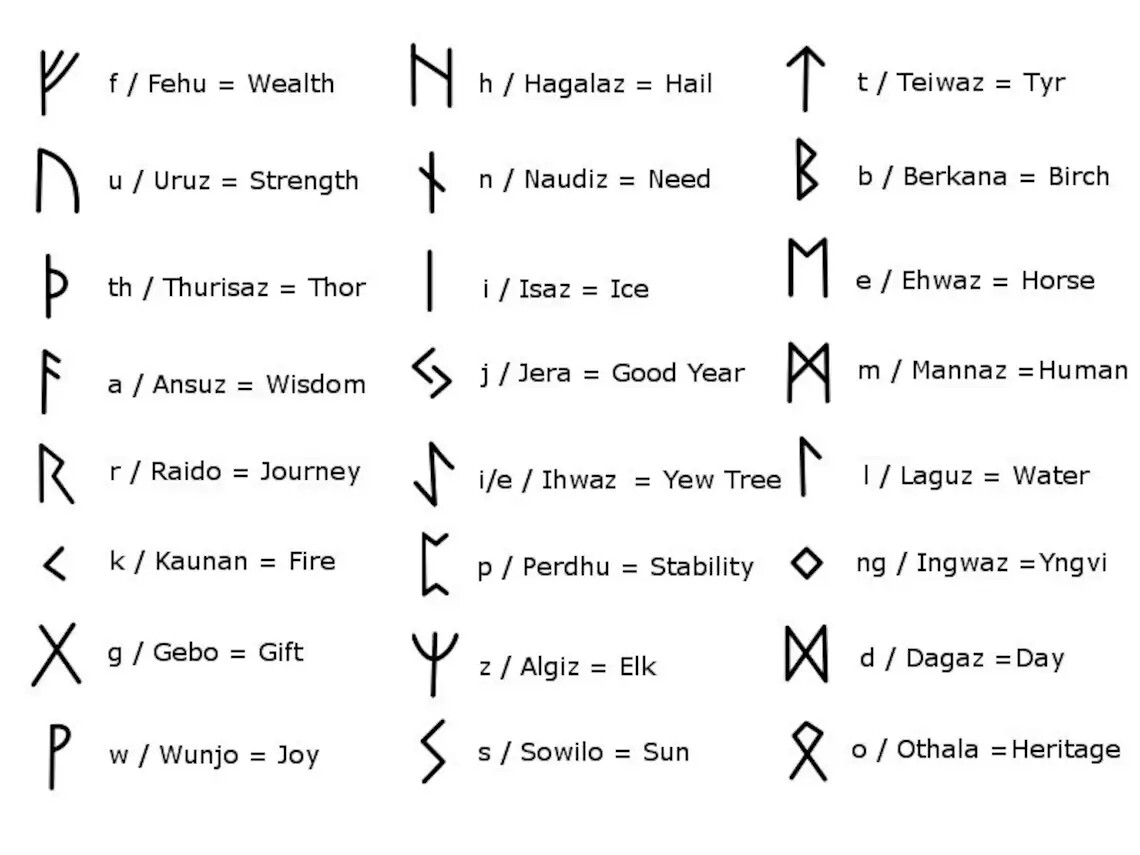
These 24 symbols, the Elder Futhark, have carried meaning, magic, and mystery for more than two thousand years of human experience.
They were carved into wood, bone, and stone. They marked swords. They were used in healing, ceremony, and spiritual communication. The structured divination practice we use today is a living modern tradition grown from ancient roots.
Sigils (An Easier Alternative)
If you’re drawn to the symbolic and the visual side of runic work, the beauty of these angular, deeply intentional shapes, you might want to try the sigil generator.
A good companion for this practice, sigils work with similar energy. They distill an intention into a single charged symbol that bypasses the rational mind and doesn’t require memorizing runes.
While not entirely the same thing, they’re also not completely unrelated, and with the generator, you can start your sigil work within a minute or two.
The Mythology of Rune Casting
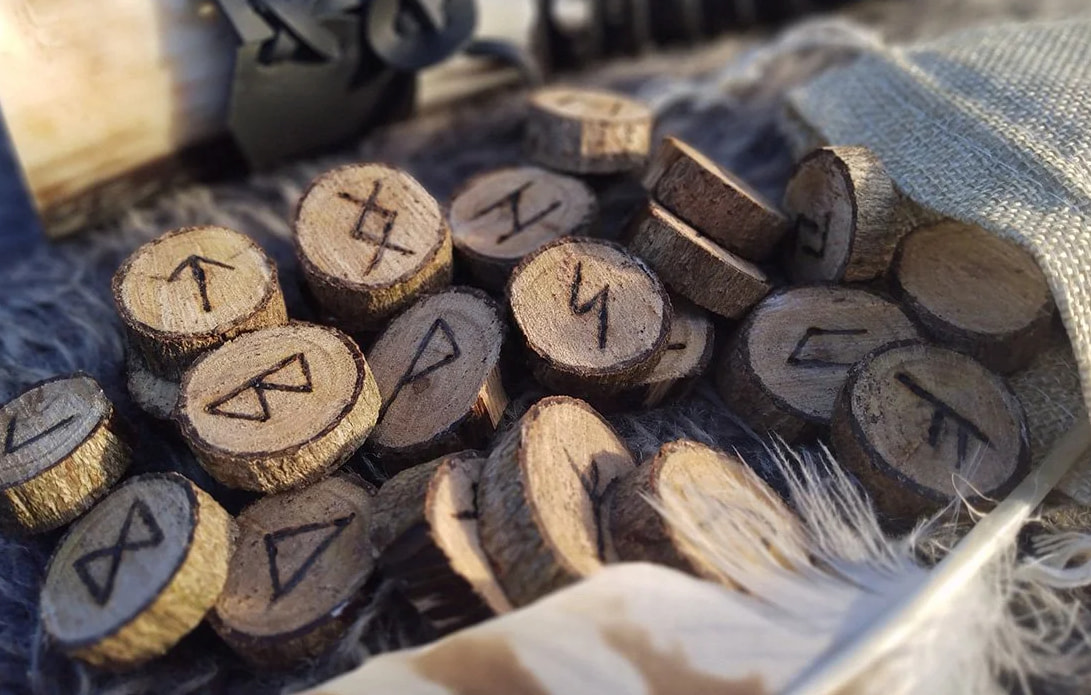
The Norse myth of how the runes were received is one of the most arresting stories in any tradition. Odin, god of wisdom, poetry, war, and magic, hung himself from Yggdrasil, the World Tree, for nine nights. Wounded by his own spear. No food. No water. Suspended between life and death, between the worlds.
And then he seized the runes, screaming.
This came as an ordeal. Transformation through suffering. He earned them through a willingness to face the void completely.
This matters for how we approach the practice. The runes respond to sincerity, showing up, and the willingness to see what’s really there, even when it’s uncomfortable.
Virtual Rune Reading
Most of what we’re focused on is going to be about manually carving and reading the runes for yourself, but if you want a quick start, you can use the rune reader here.
The 24 Runes - One Story - Three Acts
The full Elder Futhark is 24 symbols create a single journey told in three chapters of eight.
The First Eight (Freya’s Aett): Building a life in the world. Wealth, power, communication, creativity, exchange, joy. The runes of foundation. They move from raw material energy all the way to earned happiness. Each carries a shadow, too.
The Middle Eight (Heimdall’s Aett): The dark night of the soul. These are sometimes called the three winters. Hagalaz for hail, Nauthiz for need, Isa for ice arrive first, stripping everything back. This is where the practice gets humbling. Hagalaz, often feared, is both the hailstone that destroys the crop and the water that nourishes it afterward. The destruction and the renewal are the same event. This is one of those truths the runes teach quietly over time.
The Final Eight (Tyr’s Aett): Integration and legacy. The spiritual warrior emerges, learns to serve community, surrenders to deeper forces, and returns home changed. Othala, the final rune, ancestral land, heritage, home, closes the circle that Fehu, wealth, circulation, energy, began. The wheel turns. The cycle starts again at a higher level.
Reading the runes as a sequence deepens enormously with time. Just like learning to read the Tarot, at first, beginners get basic glimpses, but the more you stick with it, the more it rewards your effort.
Runes Themselves
A brief guide to all 24. Enough to begin and a starting point for a much longer conversation.
Fehu ᚠ: Wealth, abundance, energy in motion. This is mobile wealth, cattle that must be tended, traded, cared for. Wealth that stops moving becomes stagnation. Reversed: hoarding, greed, loss.
Uruz ᚢ: Primal power, wild vitality. The aurochs stood six feet at the shoulder and was one of the most dangerous animals in ancient Europe. Uruz is that force, untamed, enormous, resistant to control. Reversed: weakness, domination by others.
Thurisaz ᚦ: The thorn, the necessary boundary. It is simultaneously protective and dangerous, like a thorn bush that shelters what grows within while drawing blood from whoever reaches in carelessly. Many people flinch at this one. It usually means a boundary is overdue. Reversed: defenselessness, betrayal.
Ansuz ᚨ: Divine communication, Odin’s rune, inspired speech. Where the human meets the divine. Reversed: be careful. Odin is a trickster, and reversed Ansuz specifically warns that even apparently wise counsel may be misdirection.
Raidho ᚱ: Purposeful movement, the right road. This is channeled force toward the right outcome. Rhythm. Natural evolution. Reversed: rigidity, stasis, crisis of direction.
Kenaz ᚲ: The torch, the fire of craft and creativity. Knowledge that transforms. Reversed Kenaz has a curious gift. It means the loss of illusion. Painful but clarifying.
Gebo ᚷ: Gift, sacred reciprocity, partnership. Non-reversible (its X shape is symmetrical). In Norse culture, every gift created an obligation. Gebo is partnership and entanglement. They are the same thing.
Wunjo ᚹ: Joy, harmony, spiritual reward. The culmination of the first act. Reversed Wunjo warns of joy becoming frenzy, of being overwhelmed by intensity.
Hagalaz ᚺ: Hail, disruption by forces beyond your control. Non-reversible. Also non-negotiable. Hail melts. The destruction is the seed. When Hagalaz has arrived in your life, ask what is being cleared so something new can grow.
Nauthiz ᚾ: Need, constraint, the friction that creates fire. When all other fires go out, the need-fire is made through friction alone. Nauthiz is that friction. It is one of the most empowering runes in the Futhark, disguised as hardship. Reversed: drudgery without growth.
Isa ᛁ: Ice, stillness, the complete stop. Non-reversible. A single vertical line, the simplest rune in the entire set. It freezes everything. But ice also preserves. When Isa appears, the invitation is to rest rather than force. It also amplifies the runes around it, acting as a concentrator for nearby energies.
Jera ᛃ: The harvest, the year turning. Non-reversible. Unlike Dagaz (sudden breakthrough), Jera is gradual, earned transformation. Some things simply require a full cycle. They cannot be rushed.
Eihwaz ᛇ: The yew tree, the bridge between worlds. The yew is simultaneously one of Europe’s longest-lived trees and intensely poisonous. This is the shamanic rune, the axis connecting all worlds. Endurance, depth, spiritual resilience.
Perthro ᛈ: Mystery, fate, the unknowable. Scholars genuinely don’t agree on what this rune originally represented. That uncertainty is the meaning. Fate. Hidden things. The casting of lots. If you have a blank rune in your set, see the note below. Reversed: stagnation, obsession, isolation.
Algiz ᛉ: Protection, the guardian instinct. The shape resembles a person with arms raised toward the divine or elk antlers. This rune speaks to the intuitive warning that arrives before the conscious mind registers danger. Reversed: loss of spiritual connection, vulnerability.
Sowilo ᛊ: The sun, triumph, wholeness. Non-reversible. Solar energy after the long dark. The second act ends in light. But reversed Sowilo warns of hubris. The same sun that gives life can burn.
Tiwaz ᛏ: Justice, honour, self-sacrifice. Tyr placed his hand in the wolf’s mouth to keep a sacred promise, knowing he would lose it. True justice has a cost. Reversed: over-sacrifice, blocked energy, injustice.
Berkano ᛒ: Rebirth, nurturing, the birch tree. The birch is the first tree to return after a forest fire. New life from destruction. Reversed: domestic friction, anxiety.
Ehwaz ᛖ: The horse, sacred partnership, gradual progress. Trust between beings. Cooperative movement. Even reversed, Ehwaz is relatively gentle. Restlessness rather than catastrophe.
Mannaz ᛗ: Humankind, the self within community. One of the starkest reversals in the Futhark. Upright means expect aid from others. Reversed means expect no help now. It asks you to look honestly at whether you are connected to or isolated from your community.
Laguz ᛚ: Water, the deep unconscious, intuition. Not gentle streams but the force of waterfalls and ocean currents. Reversed Laguz is intense. Madness, obsession, being overwhelmed by what lies beneath. The unconscious mind, like water, can drown if not handled with care.
Ingwaz ᛝ: The seed, gestation, potential. Non-reversible. The energy stored underground before new growth. Ingwaz teaches that rest is preparation.
Dagaz ᛞ: Dawn, breakthrough, the tipping point. Non-reversible. The precise instant where night becomes day. Not the gradual process (that’s Jera) but the sudden, total shift. Endings and beginnings simultaneously.
Othala ᛟ: Heritage, ancestral land, the full circle. The final rune. Legacy, rootedness, home. Reversed, it warns that heritage can become prison, being trapped by the past, by clan, by inherited patterns. The tension between honouring your ancestry and being bound by it is Othala’s deepest teaching and one of the most personally honest questions the runes can ask.
Beginning to Cast Runes
Any method works. Same with much of your practice, there are no rules here and if you intuition calls you to use the runes a certain way, do so. Again, similar to different Tarot spreads, they are all acceptable and all have their place in your practice.
All modern spreads are recent inventions and that is fine. They work.
Here are some to get you started:
The Single Rune Draw is where most lasting practices begin and where many experienced practitioners return. Reach into your bag without looking. Pull one rune. Sit with it. Let the day show you what it means before you reach for a reference.
Do this for 24 consecutive days, one rune each morning, and by the end you will know these symbols in a way no amount of reading can replicate.
The Three-Rune Spread is the workhorse of rune divination. Lay three runes left to right: Past, Present, Emerging. Named for the three Norns who tend the World Tree, this spread asks not just what each rune means individually but what story they tell together.
Does the middle rune bridge the outer two or contradict them? Do they share a theme? Are they from the same aett?
The Five-Rune Cross places one rune at the centre and four around it. A common reading: centre is the core situation, left is what has shaped it, right is where it is heading, top is what’s being overlooked, bottom is the deeper forces at work.
This is where spread work starts and it can take some more work to sit with the runes and see the full meaning.
The Full Cast, all 24 runes thrown at once onto a cloth. Face-up runes are active. Face-down are hidden or latent. Runes near the centre matter most. Runes that land touching each other are read as connected energies. Runes that land outside the cloth are left out of the reading entirely.
This method requires the most intuition and yields the richest results.
Formulating your question matters more than most beginners expect. Again, same with the Tarot (there are a lot of parallels).
Open-ended questions work best, like “What do I need to understand about this situation?”
Focus on your own experience rather than trying to control outcomes. And if a reading leaves you puzzled, don’t immediately recast. Let the meaning surface. Some of the most important readings only reveal themselves days later.
Making Your Own Set
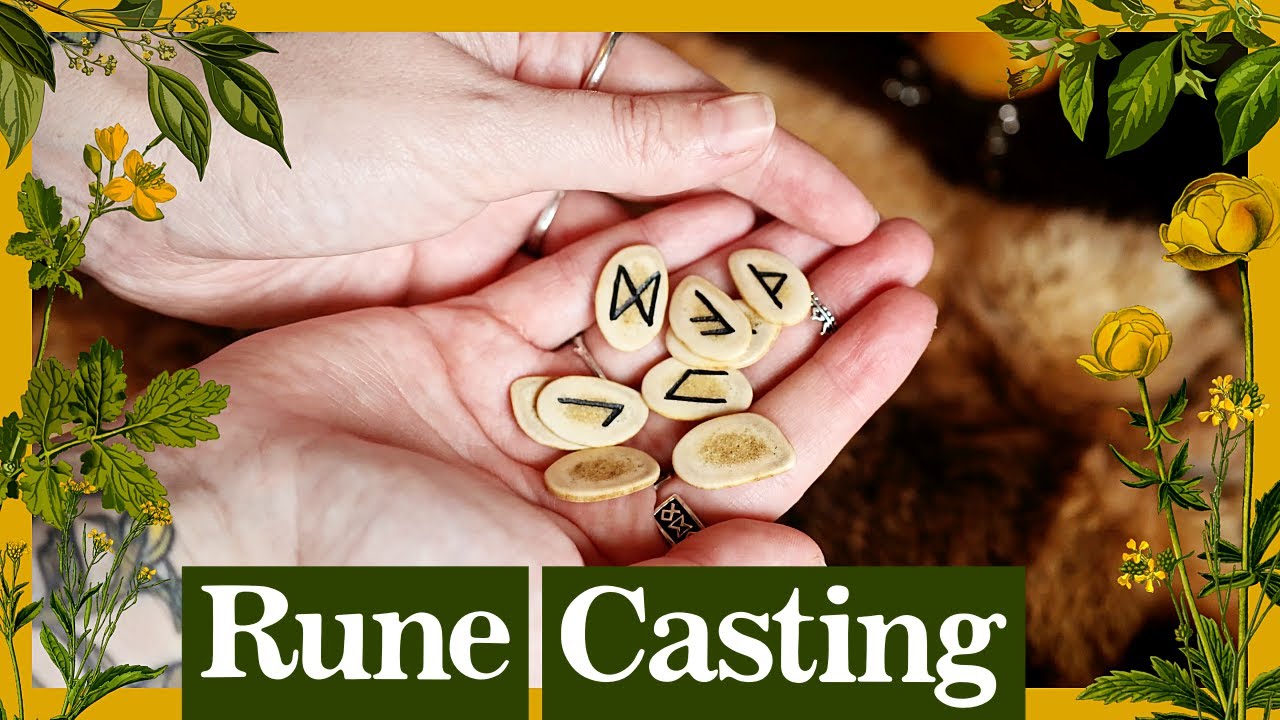
You can feel the difference between a purchased rune set and one you have made yourself. Making your own is kind of a 24-step initiation. Each symbol carved is a symbol learned in the body, not just the mind.
Fruit-bearing wood is traditional. Apple, rowan, ash, or birch all carry resonance for different reasons. Find wood that means something to you. If you can, spend time with the tree first. Ask permission before you cut.
Just because it is tradition, doesn’t make it a rule. I know witches who 3D printed their runes or you can use a pen and paper. Just treat the runes with respect.
As you carve each rune, chant its name.
This is called galdr, activating the rune through sound on one long, low, sustained exhalation. The physical act of carving combined with the vocal act of chanting creates an unusually direct relationship with the symbol. When the carving is complete, stain the marks red. Red ochre is traditional, though red paint works. Then seal with beeswax or linseed oil.
Purchased sets are valid and many people work with them for years. But if you are feeling called to deepen the practice, making your own set is one of the most significant things you can do.
Again (just like a Tarot deck), treat the runes with respect. Store them somewhere safe and if one gets damaged, return it to the Earth by burying it lightly.
Getting Beyond the Basics
The runes you dread are usually the ones you need (like seeing a Tower in a Tarot spread).
Hagalaz, Nauthiz, Thurisaz, Laguz reversed. Experienced practitioners consistently report that the runes they initially feared delivered the most transformative work. The rune of hail is also a rune of seeds. The rune of need is the rune of fire made through friction.
Our resistance to certain symbols is itself information.
Rune practice usually changes you slowly… then suddenly.
Many people begin rune work for divination and find, years in, that the divination aspect has become just one part of something much larger, a relationship with symbols that shapes how they see patterns, how they sit with uncertainty, and how they relate to loss and transition. This is what a genuine practice feels like.
Some readings only make sense later. If you cast the runes and the result feels like nonsense, don’t panic and don’t immediately recast. That confusion is sometimes the runes’ way of saying this isn’t something you need to know yet. Learning to hold an unanswered question with patience rather than anxiety is itself a teaching the runes offer.
Rune work asks for reciprocity.
The practitioners who describe the deepest, most consistently insightful practice are those who work with the runes regularly, journal about their readings, study the underlying mythology, and approach the whole thing as a relationship rather than a transaction.
Show up consistently and honestly, and something shows up for you.
Study the Runes
Spend time just looking at the runes, not looking up their meanings. Just looking.
Try to really see how Isa is a single vertical line, utterly simple, completely still. Notice how Dagaz, dawn, is two triangles meeting in perfect balance at a central point, a symbol of two states in the instant of exchange. Study how Othala, home, heritage, contains within it both the shape of a diamond and the form of a human figure standing on the earth.
These shapes were designed to be carved.
Their angularity was part of their meaning. The longer you spend with them, the more they begin to feel less like letters and more like what they always were, 24 windows into something old and alive.
Where to Begin Tonight 
Pull one rune. Don’t research it first. Hold it in your palm and ask what this shape wants to say to me right now. Write down whatever arrives, images, feelings, memories, even just a colour or a temperature. Then, and only then, read the meaning.
Notice what you already knew.
That gap between what you sensed and what the symbol officially means is where your personal relationship with the runes begins.
If a simple start, you can get a > free rune reading here. Just enter your question.
I hope this helped and if anyone does their first rune reading from this, I’d love to hear about it!