Is it possible to be both a Christian and a witch?
I grew up in church, like my whole life, and it’s deeply part of who I am. But lately there’s this pull toward the craft, toward working with crystals and energy, and I can’t just ignore it. So I’ve been sitting with this question of whether you can actually be a Christian witch or if picking one means dropping the other.
Kids at school already call me witchy because of my jewelry and the sigils I doodle on myself so… I guess the vibe was there before I even named it lol. Love how welcoming this space is.
I know the Bible has its opinions on sorcery. I do. But “sorcery” in biblical context and what most of us here practice feel like very different things to me (and I realize that’s maybe a whole separate conversation). I just want to explore and see if blending both paths actually works.
If anyone’s already walking this line, I would love to hear how you make it sit right. Not looking for permission exactly, more just… perspective.
27 Likes
Your craft is only as strong as your self-knowledge. Discover your true witch type and the ancestral power waiting inside you.
Take the Quiz Here
I reckon anyone who tells you what you can or can’t believe probably ain’t worth listening to.
I’ve known women who prayed to the Almighty every morning and still knew how to read a fever or turn a breech baby. I never once thought to tell them they were doing it wrong. That’s just bossiness dressed up in conviction.
The craft, properly understood, is about what you do, whether you mean it, and taking responsibility for the meaning. A person who works with intention, takes care, and faces the hard parts of themselves is doing the work, whatever name they stick on it.
Now there’ll be Christians who tell you you’re damned, and witches who tell you you’re not pure enough. My advice is to smile at both sorts and carry on, because people who are very certain about what you ought to be are usually working out something that’s got nothing much to do with you.
You know yourself. Start there.
1 Like
Short answer: yes. Folks have blended Christianity and witchcraft for centuries. The “Christian witch” label might be new, but nothing else about it is.
In early modern Europe, cunning folk and healers worked in a Christian framework: biblical psalms and prayers to Mary, holy names in their charms. Emma Wilby’s Cunning Folk and Familiar Spirits shows they didn’t agonize over it. They just prayed, cast, and healed.
You’re spot-on about biblical “sorcery.” Exodus 22:18’s Hebrew mekhashepha became Greek pharmakeia in the Septuagint. Scholars often translate it as “herbalist” or “poisoner,” not modern witchcraft. The root kashaph might even mean “mutterings” or “cutting herbs.” Appalachian granny witches were devout Christians: Bible verses to stop blood, pray away warts, prophetic dreams. They even called it “the craft.” 
You’re walking old ground. Explore on. If anyone gets annoyed by it, tell them we said you were allowed. 
2 Likes
Firstly (and I am sure you already know this) you don’t need to justify any of this to anyone else.
Magic in the West has been Christian for a thousand years. Folk healers and charm-casters were mostly Christians. The “witches are pagan” idea is the new kid on the block.
Psalm magic is a great start for you. Check out Shimmush Tehilim, a 10th-century text using specific psalms for magic. It influenced Pennsylvania Dutch Pow-Wow, Hoodoo via ‘Secrets of the Psalms,’ Jewish kabbalists, German healers, and Black conjure workers. Try Psalm 23 for protection or 91 for warding, and 109 for counter-curses.
Christian witches do bibliomancy too. They flip open the Bible for messages (Christians have done this forever, lol). Light candles, cast circles, anoint with oil, pray to Jesus, all in one. Holy water, saints, Virgin Mary on altars. Folk Catholic traditions in Latin America and the Caribbean have blended this for centuries.
1 Like
Grew up in church too, still carry a lot of it with me, but the craft doesn’t ask you to drop it. Neither does actual Christian teaching, just angry people who don’t understand (or often care to try). The western occult tradition is deeply Christian at its core. Rosicrucianism mixes Christian mysticism with Hermeticism and Kabbalah. Old grimoires are full of Christian liturgy and divine names.
Cunning folk in England did healing, divination, finding lost stuff. They called themselves Christian, and so did their clients. The tension comes mostly from post-Reformation Protestants who tried to stamp it out. Before that, the church coexisted with folk magic for centuries.
Look at Slavic “dvoeverie” (double faith). People kept herbs, chants, crystals, and land spirits right alongside God, Jesus, and saints.
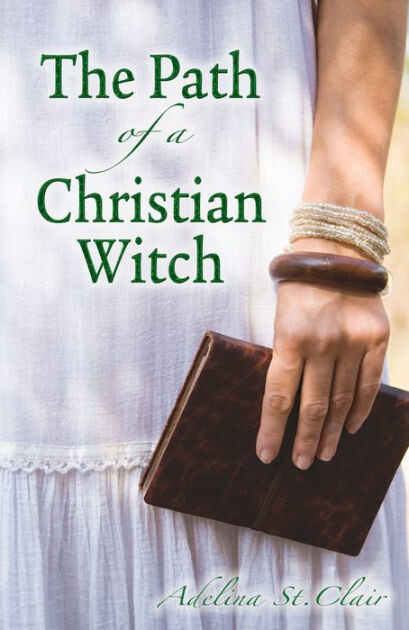
Plenty have walked this path sincerely. Adelina St. Clair’s The Path of a Christian Witchshares one modern take. It might resonate with you.
2 Likes
The craft is a practice, not a religion. You can be of pretty much any faith and still incorporate it into your spiritual life.
No problem. Walking both paths is normal.
It kind of drives me crazy when people act like Christianity and pagan practices are totally incompatible. Just look at the symbols, holidays, rituals…
So much of modern Christian tradition has pagan roots, and most people just don’t think about it (or don’t want to).
If someone answered “No, you can’t do that” would that change what you believe? That should answer your question for you.
There is a lot of historical overlap and even if there wasn’t, don’t let other people decide what you’re allowed to believe in.
Southern folk magic is literally built on reciting Psalms for protection and treating the Bible as a talisman. Your faith doesn’t need to be separate from your craft. Petitioning angels and saints, incorporating the incenses mentioned in scripture, that’s already the kind of weaving you’re asking about.
And if you’ve got your own religious trauma with Christianity (which, fair), you probably understand exactly why some practitioners here react the way they do. Even as you carve out something that works for you.
4 Likes
When I was making my own swap from Christianity to witchcraft, ‘The Path of a Christian Witch’ really helped me process things. Might be worth checking out if you haven’t already. It does a good job of bridging both worlds without making you feel like you have to torch everything you believed before.
I ended up not staying on the Christian witch path myself, but who knows, it could work for you.
If you grew up deep in the church, there are probably layers of internalized guilt you don’t even fully recognize yet, and that stuff can genuinely interfere with your work. More than people realize.
Fear of divine punishment sits in the body, not just the mind. I’ve watched people try to cast while carrying this low-frequency dread that basically acts like static on the line. It just doesn’t move the way it should.
Before you worry about blending theologies, do some dedicated shadow work around the shame and fear responses the church wired into you. The conditioning runs deep, especially if you were raised in it young, which it sounds like you were.
You want to make sure the faith you carry forward is actually yours and not just residual programming.
1 Like
If you haven’t already, look into working with saints. They were my bridge.
Felt familiar enough from church that my hands stopped shaking when I lit the candles, and that was enough to start.
No judgment at all. Expect some friction from both directions. Church folks who find out about your practice, obviously. And witches who’ve been genuinely harmed by Christianity and aren’t exactly thrilled to see it at the altar.
For the most part, 99.9% of people on both sides won’t care because you’re not harming anyone.
It doesn’t mean either path is wrong for you, just that building community is going to take more intention than usual, and maybe more patience than feels fair. Seek out spaces specifically for Christian witches rather than expecting a full welcome in every general circle.
8 Likes
Christian magic has been around forever. Most Christians won’t care, some might be a little confused and won’t say anything. The ones who have an actual problem with… I will bet you haven’t read their own Bible and don’t understand the past of their own religion.
Medieval grimoires like the Arbatel were written as non-heretical options. Syncretic stuff, from Voudou to Appalachian water witching, has always blended right in.
Going back to the Bible, the condemnations hit foreign magic. God gave the Israelites Urim and Thummim for divination. Elisha worked rituals for miracles. The “witch” of Endor was a baalat of Baal. Saul’s sin was chasing foreign gods.
So when folks quote verses, I remember theologians have unpacked these nuances for centuries. That explains why Christian magic never vanished.
3 Likes
Christian mysticism might really speak to you. There’s a rich tradition there, deep spiritual connection through incense, candles, or prayer.
None of that pulls you away from God.
And nothing that tells you what you can and can’t believe in or practice. That is very much a human invention, nothing coming from a higher power.
For me, the line is about whether I’m trying to take control away from the divine or directing worship at objects themselves. Once you think it over, it becomes clearer where you stand. But if holding a crystal brings you something spiritually meaningful, that’s yours to honor.
2 Likes
It matters less what Christians think about mixing the two paths than whether it sits right with you.
Most practitioners I know who’ve walked this line just stopped asking for outside permission at some point. They started trusting their own discernment instead, and from what I can tell, they’re better for it.
Trinity Witch. I’ve heard that floating around for people who blend Christianity with the craft, though I’m not sure how widely it’s used outside certain circles.
Might be worth looking into.
Yes, you can be a Christian witch. Full stop.
Christian folk magic has a deep history. Some of these traditions go back centuries and were practiced directly within Christian frameworks. Some of them are closed though, so keep that in mind as you explore.
God created this whole incredible natural world, the crystals, trees, flowers. Divine energy flows through all of it.
I’m a Christian and these paths have never felt at odds to me. Plenty of Christians already believe there’s power in speaking in tongues or in the sacrament. The rocks and plants around us work the same way, just a less church-approved version.
My line is avoiding anything that invokes evil spirits or demons. That’s it. Beyond that I figure I’m celebrating the beautiful world we were given. But that’s purely my take… you get to choose whatever path feels right to you.
2 Likes