Sigil magick has a little bit of everything I love.
Easy enough for baby witches to start working with right away (especially with some tips I’ll be sharing later in this post) and powerful enough for experienced witches.
There’s a reason we keep returning to sigils over the years, in different phases of our practice and across traditions. They work with where you’re at. They don’t require much, yet they give you this hard-to-describe feeling of having more control, of making your intentions visible, and of your inner world starting to change.
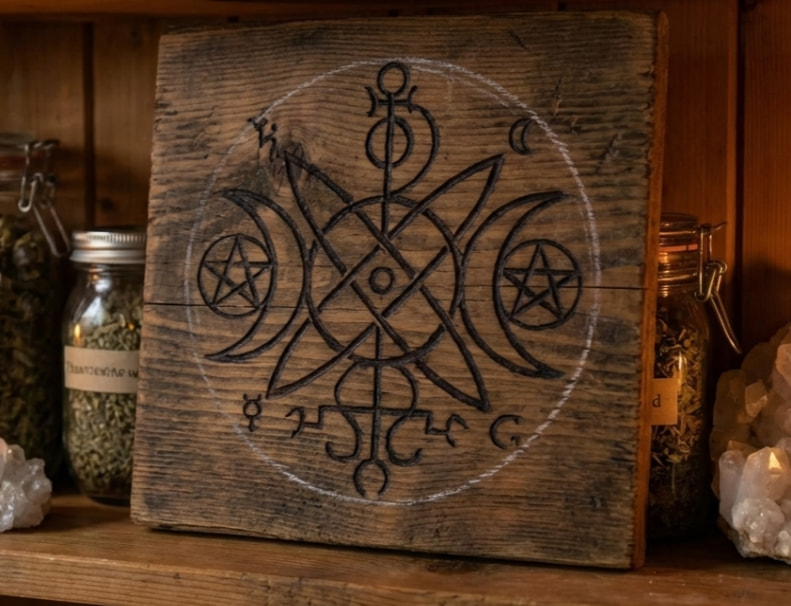
This is written for beginners as well as people who have been using sigils for years and still wonder about some things.
I think a lot of people overlook sigil magick but there’s something incredibly effective in its simplicity.
First, a little history (because it matters)
You can skip this section if you want, but it really does help to understand why you are doing a practice.
Many of the sigils we see have roots in medieval grimoires. The Lesser Key of Solomon, for example, listed the unique sigils of 72 spirits. Each one was like that being’s personal signature. They were received symbols, external and authoritative.
You didn’t make them yourself. You used what was already there (we’ll get to that).
The person who changed that approach was Austin Osman Spare. He was a working-class London artist who died in 1956 without much recognition. He’s now seen as one of the most influential figures in 20th-century magick.
His big idea was that you can make your own sigils based on your own desires. You don’t need spirits or complex ceremonies. Your unconscious mind is what makes it work. The symbol is just the way in.
His method looks simple.
You write a statement of desire. Take out the vowels. Take out repeated consonants. Then turn what’s left into an abstract glyph. Finally, you plant it in your subconscious during a moment of altered consciousness, what he called the Death Posture, and then forget about it.
I’ll be showing you a very easy way to do this in a few moments. Bear with me.
What often gets left out in most versions of the story is that Spare’s system was a lot richer than that one technique. He believed sigils worked through atavistic resurgence, reaching into deep evolutionary and ancestral memory. He created his own personal symbolic language called the Alphabet of Desire. Each letter stood for a physical sensation from past experience. Most of that deeper philosophy was dropped when Chaos Magick emerged in the 1970s.
They boiled it down to three steps: construct, forget, charge.
That change made Sigil work available to a lot more people… But it also took away some depth. Understanding the background, how every sigil you make carries echoes of Spare’s ideas and the older grimoire traditions before him, gives the practice more weight.
How Do Sigils Work?
This is the interesting part. I think it’s helpful to keep a few different explanations in mind without picking just one.
The key idea Spare came up with is lust for results.
It means the anxious worrying about whether the sigil will work. That anxiety is exactly what can stop it from working. Once you see how it operates, you start noticing it in all kinds of situations.
The idea is that when your desire stays in your conscious mind, your rational thoughts come up with all the reasons it can’t happen. That kills the intent before it can grow. The sigil’s abstract form gets it past that mental block. By turning the desire into a symbol and then truly letting go of what it means, the intent can reach deeper parts of your mind.
Some people like the psychological explanation best.
The sigil works on your reticular activating system, the part of your brain that decides what you notice out of all the information coming in. After you charge a sigil, you start picking up on opportunities and connections you would have missed before.
The symbol carries energy, and creating and charging it alters reality.
Generate Your Sigils
We will go into the more traditional ways of creating your sigil by hand in a moment, but there is an easier way. The Sigil Generator. Just enter your intention and click cast…
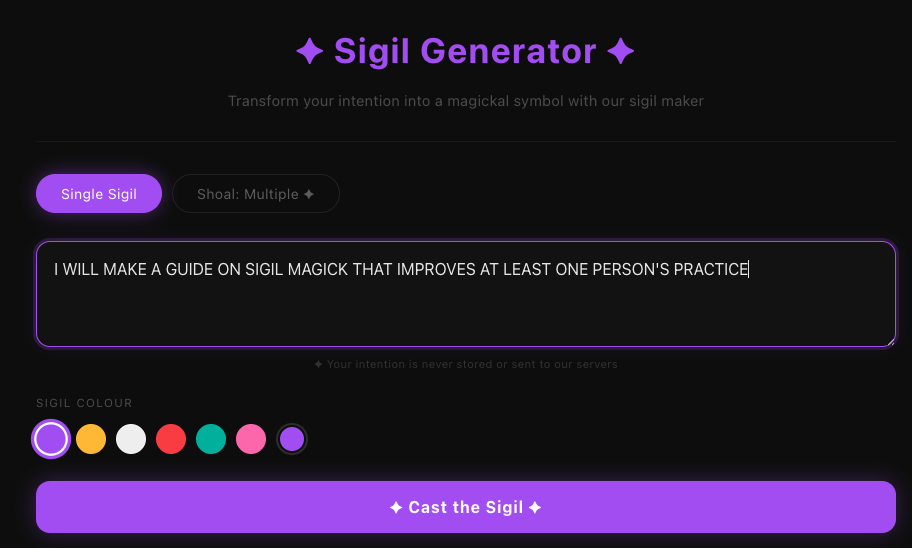
And your intention will automatically be there.
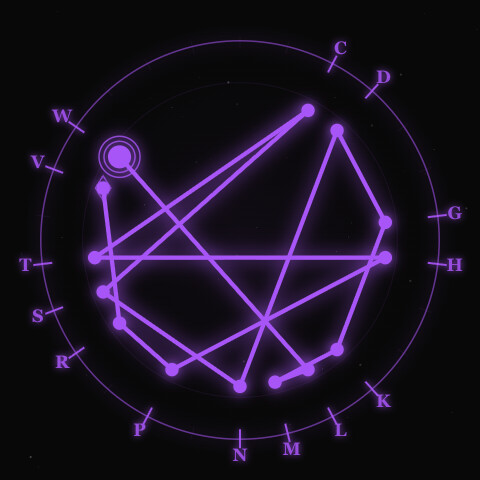
You can also create a shoal, which is multiple sigils working together, usually with a related goal in mind.
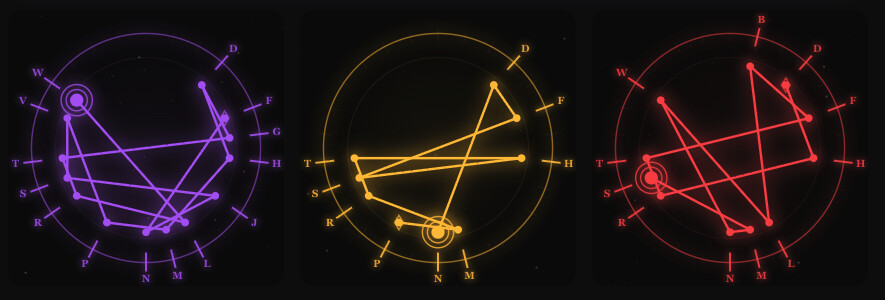
You can generate your own here.
Ways to Make a Sigil
If you’re more of a traditionalist and would rather make a physical Sigil, there are a couple of options.
The letter-elimination method is the most popular one, but there are others. Finding the one that fits how your mind works is part of it.
The letter-elimination method (Spare’s original): Write a statement of intent in the present tense and positive. Remove the vowels and duplicate consonants. Then combine the remaining letters into an abstract glyph by overlapping and connecting them until you can’t read the original words. Grant Morrison said most homemade sigils look a bit strange, like UFO writing or witchy wall-scratchings. That’s normal. That’s what you want.
Regardless of the method you use… you do not need to be able to read your Sigil again afterward.
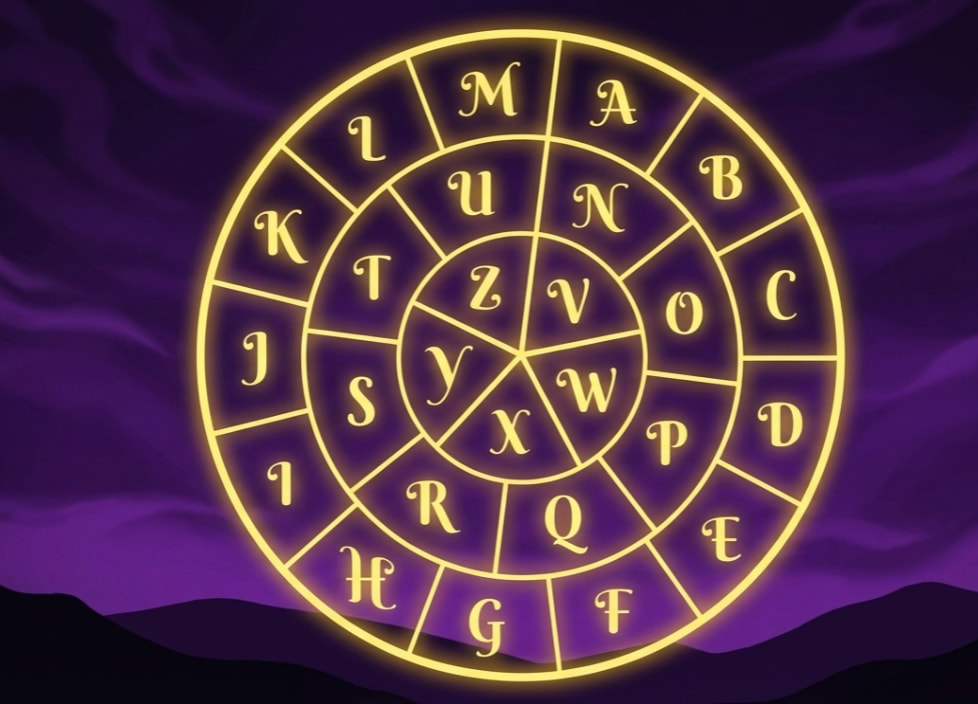
The Rose Cross method: You map the letters of your statement onto a circular chart with 22 petals, then connect them in order. The final shape has no obvious letters in it. This gives strong abstraction. Some adapt it using Runic or Enochian letters for extra meaning.
The pictorial method: Start with a simple drawing of what you want. Then keep simplifying and abstracting it step by step until it’s not recognizable. This suits visual thinkers who find the letter methods too abstract.
Automatic drawing: Get into a meditative state, hold your intent in mind, and draw freely without controlling it. Keep going until one shape feels right. It’s more intuitive and physical than the structured methods, and the sigils often feel powerful right away.
Non-visual sigils: You can turn your intent into a series of gestures (an action sigil), a jumbled mantra (verbal sigil), or even a tune by mapping letters to notes. These are less common but worth trying if visual symbols don’t click for you.
Kitchen and body methods: Draw with lemon juice that shows when heated, stir tea in sigil patterns, carve into dough before baking. Write on the bottom of a lotion bottle so that using it activates the sigil. Draw on your wrist or the bottoms of your feet. These are fun and often very effective, probably because they fit naturally into daily life and avoid overthinking.
The standard teaching is that looks don’t matter, only the intent does. But some people find that using nicer materials makes a real difference. Drawing carefully with a good pen instead of quickly while distracted. Your unconscious seems to respond when you treat it seriously. A sloppy sigil might not get much attention.
Charging Your Sigil
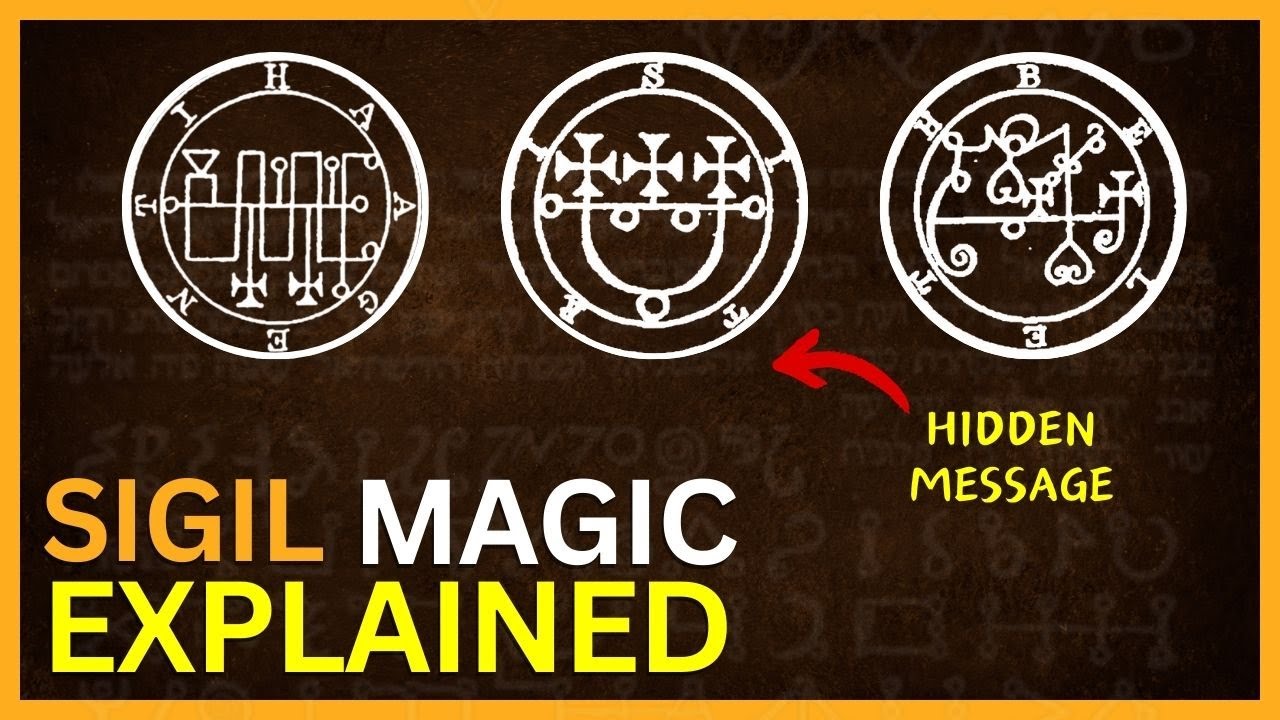
Once you have it, we have to charge it.
Focused gazing is the standard way: look at the sigil softly until your mind quiets, and keep going until you sense a change. You might see the lines seeming to lift or the sigil flashing at the peak moment. You might just get a sense of it being done. Either way works. That feeling of completion is what you’re looking for.
Breath and voice: Repeat your intent as a chant, speak it with real emotion before burning the paper, or use breathing exercises to shift your state.
Peak gnosis methods: Spare liked using orgasm for that empty-minded moment. Pain or exhaustion through exercise can create a similar opening. These aren’t necessary for everyone, but many find they work well.
Laughter: This one doesn’t get mentioned as much, but it’s effective. Laughing at the whole thing, at how odd it feels, can break the attachment better than being too serious. Gnosis doesn’t always need solemnity.
Passive everyday methods: Set the sigil as your phone background, put it under your pillow or in your wallet. Carry it until it blends into the background. These use steady low-level exposure and can be a gentle way to start if big rituals feel overwhelming.
The “Forgetting” Debate
You have probably heard that you must forget a sigil after charging it. Burn it, bury it, flush it, and don’t think about it again.
This is one rule that is worth thinking about more carefully.
The traditional view makes sense. Spare was clear that deliberate forgetting is important. Peter Carroll built on that. The logic is that keeping it in your conscious mind ties it to your ego, where the lust for results can interfere.
But about ten years ago, Gordon White wrote an essay that challenged this. He looked at research on how TV ads work. A big study showed that people who paid the least attention to the ads still had their preferences shift toward the products. They didn’t remember seeing them. Yet it affected them.
His point was that “forgetting” might not be as important as “not actively noticing.”
That led to the gallery method. You put your sigil on a mirror, use it as your phone wallpaper, or pin it with other pictures. After a while, your conscious mind stops seeing it, but the subconscious keeps working with it.
You can do either.
For one-off urgent things, the fire-and-forget style works well. For protection, habit changes, or long-term goals, having the sigil around quietly can be better.
Beginner Mistakes With Sigil Magick
There are a few things to watch out for as a baby witch or even an experienced practitioner who just hasn’t practiced with sigil magick much.
Imprecise wording causes the most problems.
Sigils take your words literally in unexpected ways. Write your statement like a contract. Check it for any interpretation that could go wrong. The monkey’s paw effect is real. You get what you asked for, but in a bad way. It’s almost always because of something overlooked in the intent.
Starting too ambitiously makes it hard to see progress.
A good idea is the robofish approach. Add a small, likely sigil along with your main one. When the little one happens quickly, it builds your confidence for the bigger goal.
Overthinking the design can lead to “sigilblock.”
You might make thirty versions of the same Sigil. Sometimes the design doesn’t come because you’re not meant to use a sigil for that right now. It’s telling you to handle it another way.
Using someone else’s sigil without understanding it can be tricky.
What worked for them might not work for you. Vague ones carry unknown effects.
Sigils in your Practice 
If you’re working in a Wiccan or general witchcraft tradition, sigils fit in well with what you already do.
Moon phases can add power: new moon for new starts, waxing for growth and drawing things in, full moon for strong charging, waning for banishing. If you don’t usually time other spells by the moon, you don’t have to here either. Your intent is what drives it.
Elemental correspondences can influence design and charging.
Earth for stability and material things (use straight lines, earth colors, charge by burying). Air for communication (spirals, charge with smoke or air). Fire for passion (sharp shapes, charge with flame). Water for healing (curvy lines, charge with water).
Candle magick integration works nicely.
Carve the sigil into the candle. As it burns, it charges and releases the sigil at the same time. The leftover wax can be used for other sigils, which has worked well for me.
Protection work is a real strength for sigils.
Draw them on door frames or windows with oil or chalk, put them under rugs or behind mirrors. They don’t need belief, just intention. Refresh them with the new moon or each season to keep your space protected.
Remember!
Sigil work requires something that daily life doesn’t encourage much: holding a clear intention and then truly releasing it. Not pushing it away, just letting it be.
It’s not always easy.
The times when you struggle with that, when you keep checking or worrying, can tell you a lot. They often point to deeper concerns about whether you deserve things or can make change happen.
It’s best to work on your own life and growth. Trying to control others with sigils often causes problems. The idea is that magic that takes away someone else’s freedom ends up affecting you the most.
You can use the sigil maker here. Just enter your intention and download your sigils.
