How should I explain Chaos Magick to someone who’s already practicing but hasn’t gone down this particular path?
I’m not looking for a textbook answer, just wanna know how you talk to your witchy friends about this. My own understanding keeps changing the deeper I go (almost frustratingly so), and I would love to hear how others have made sense of it through experience rather than theory.
28 Likes
Your craft is only as strong as your self-knowledge. Discover your true witch type and the ancestral power waiting inside you.
Take the Quiz Here
Terminology gets bashed around a lot but the original idea was focused on practical results over traditional belief systems.
Stems from the belief that if you ritualize your desires and your needs with focused intention then anything is possible. It came from Aleister Crowley and can be an interesting dive.
It is probably not what a lot of baby witches would expect. If they’ve got the the term from fantasy writing perhaps.
It wouldn’t be what a lot of us would refer to as “magick” but I remember reading this explanation a while ago and had to go find it for this:
Its a form of cognitive training in which your subconcious gets emphasized over your concious self and you do your “magick” with more intention and focus because u are not constantly bothered by interference or “negative energy” from the world around you. Sensory deprivation tanks essentially can be a profoundly magickal experience for this very reason.
3 Likes
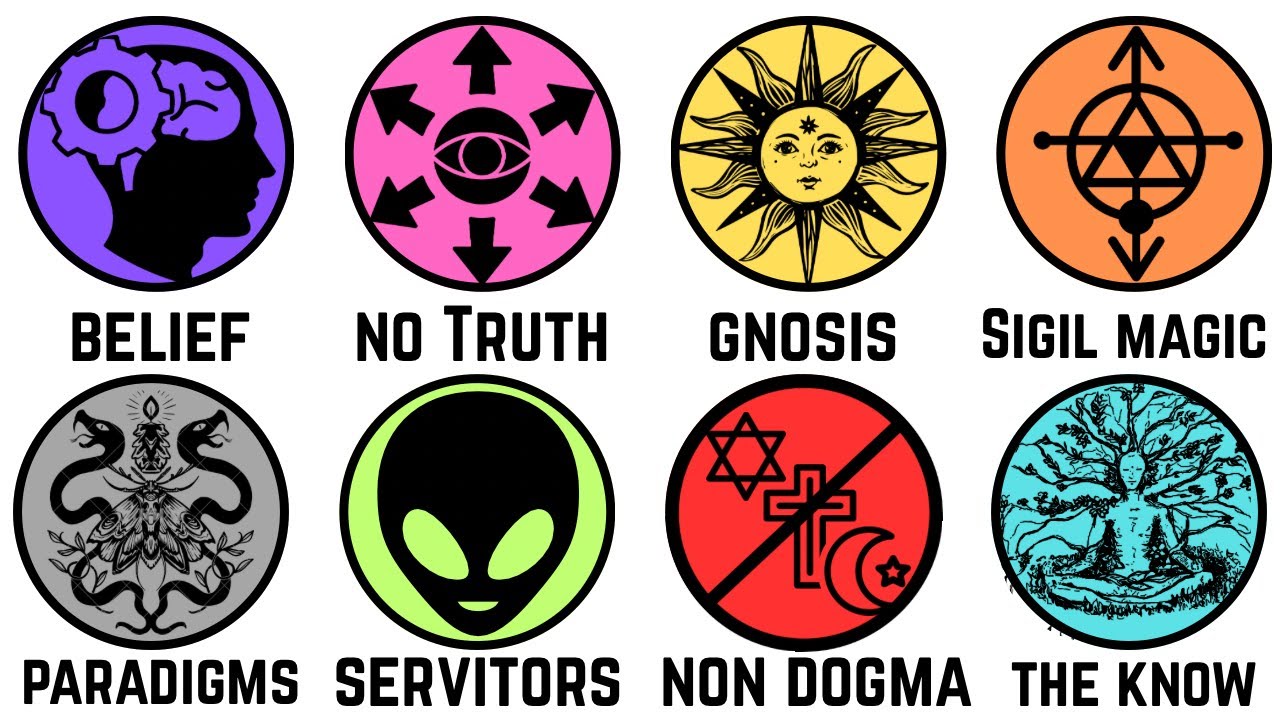
Belief as a tool. Short version for anyone who practices. The longer one’s frustrating because your understanding should keep shifting. People think you don’t know your stuff, but the instability is the point. If your framework feels settled, you’re probably not doing chaos magick anymore lol.
What clicks for witches (in my experience): it’s your tradition-borrowing, but deliberate. No system’s The Truth; they’re maps. Pick the one for your path. Phil Hine on deconditioning: shatter ego’s clinging beliefs about “you.” That’s the uncomfortable, slippery part.
4 Likes
The simplest way I put it to witchy friends: chaos magick is magick with the religion scraped off. Harsh, maybe. But that’s from the founders. They wanted to strip away the bloated symbolism and get to what actually works. Your changing understanding is perfect for chaos magick. Belief is fluid. Peter Carroll suggested rolling dice for random paradigms: paganism one week, monotheism next, atheism after. It’s about deconditioning.
Sigil magick is a big part of Chaos magick. That is where I would point them, because it will fit more into magick as they understand it.
Whatever works, works. No rules, no dogma. Just results.
The belief itself is the tool, not whatever system you happen to be borrowing it from.
Chaos magick is basically just giving yourself permission (for lack of a better word) to keep what works and toss the rest.
If you’re trying to explain it to your witchy friends, tell them to pick one tradition they’re already curious about, really dig into it (not just skim a few correspondences), and see what actually clicks versus what feels like filler. Once you know that, the rest kind of follows. Just permission to curate, honestly.
It gets a little messy there.
Chaos Magick as a distinct movement usually traces back to Peter Carroll and Ray Sherwin, not directly to Crowley. Crowley’s influence on the broader current is undeniable, of course. But the whole ethos of Chaos Magick, the idea that belief itself is a tool you can pick up and put down, marked a deliberate departure from more structured systems that came before it, Thelema included. I only mention this because I myself got the lineage mixed up for a long time. It subtly shaped how I approached the practice in ways that weren’t always helpful.
Still very much a student of all this, so take my perspective for what it’s worth.
3 Likes
Chaos magick just names something we already do. We pick up and put down different frameworks depending on what we’re working, treating deities and correspondences like tools we grab when they serve us. Chaos magick runs with that, makes it the whole philosophy. Every system is a tool you use and set aside when it doesn’t fit anymore.
Phil Hine’s Condensed Chaos is where I’d point any practicing witch who wants to understand this path. Sigils, servitors, chaos versions of foundational exercises, all laid out without the density of the older texts. Some of those older texts are genuinely rough going. Just a solid starting point.
1 Like
The belief thing is literally the entire point. You could decide Spider-Man is a god if it makes your magic hit harder, work yourself into genuinely believing it, use it, and then just drop it when it stops serving you. Everything else follows from that one idea. Keep what works, ditch what doesn’t (even the ‘sacred’ stuff, which can be hard to accept), make your own rules. Sigils are just another tool in that framework.
The way I think about it is like what punk rock did for music. Strip everything down to what actually gets results. Borrow whatever works from any tradition, then drop it when you’re done. No loyalty required. You can wear different belief systems like masks without getting attached to any of them. In a way, it’s kind of similar to asking about being a Christian witch. You ditch the rules, blend what works and do what feels right as long as you’re not doing any harm.
If you haven’t tried sigils or servitor work, it might be worth a shot.
3 Likes
It basically comes down to remixing or full-on DIYing it. Eclectic practitioners pull from different traditions and beliefs, weave them into something personal but still recognizable. Chaos practitioners build from scratch on their own terms and throw out the established playbook entirely. That’s a lot of freedom, given how much structure most paths rely on.
Broad strokes. It might give your witchy friends a starting point.
Really, the ‘belief as a tool’ concept is the whole thing. For me, that’s how I would explain it.
You pick up whatever system, symbol, or deity works, use it intensely while it’s doing something for you, and then just drop it when it stops serving a purpose. They don’t really worry much about the ethical side. There’s no guilt or loyalty to an idea that doesn’t serve your interests at that moment.
That part took me a while to actually get comfortable with, coming from other practices. But that flexibility is what sets chaos magic apart from everything else I’ve worked with.
1 Like
I spent three years in devoted practice with Brigid before I ever looked into chaos work. The first time I deliberately set that relationship aside to try a completely different method, I cried. It worked beautifully. My devotion had been partly about my own need for consistency, not just about Her, and I wasn’t ready to see that so clearly.
Chaos magick showed me which parts of my faith were serving the work and which parts were just serving my comfort. Those two things looked a lot more alike than I wanted to admit.
If your witchy friends ask about this path, maybe mention that it can reshape how you relate to the beings you’ve already been working with. That’s not always a painless process.
1 Like
I don’t know much about it, but every time I see people mention chaos magick, it almost always seems to be sigil magick. Does anyone know why it’s so based on sigils?
3 Likes
I used to think chaos magick was its own thing, like a system with its own rules I needed to sit down and learn. Took me a while to get it.
It’s a way of approaching all the systems… and sort of none of them at the same time.
You try on different reality tunnels, see how they shift your perception, then swap them out when something else serves you better. And good luck pinning down any solid definition because it kind of avoids that by definition. Find what works and keep going with it until it stops serving you.
6 Likes
I get the “belief as a tool” framing, but doesn’t that eventually hollow things out? Like if you’re consciously choosing to believe in Hindu deities the same way you grab a hammer off a shelf… is that really belief anymore? Or just performance.
The pick-and-choose approach works for a lot of chaotes. I can see the appeal of that flexibility. But I wonder if something gets lost when nothing is allowed to be sacred on its own terms. Some traditions would say the commitment itself makes the magick potent. Treating belief as disposable caps the depth somehow.
Maybe the nihilism foundation just works for you. Fair enough. But has anyone here found that going deeper into one system, really committing to it, opened up more than staying fluid across all of them?
7 Likes
For practicers of chaos magick, belief is just a tool. Pick it up, put it down. Like I might work with an Egyptian patron and Greek goddesses in the same practice, or flip solar/lunar associations for a specific working and then drop that whole framework the second I’m done.
I don’t really know if belief is the right word at that point.
The ‘chaos’ part throws people off because they hear randomness. It’s about refusing to be locked into any single system while still having your own method that makes sense for how your mind works. Deeply personal, just not dogmatic.
3 Likes
Honestly, I’ve started calling it weaponized imagination when talking to friends. Not sure that fully captures it, though. It gets close, but something still feels off, like the words are doing the work without actually holding the weight.
Okay, so magick for people who don’t like being told what to do. I explained it to a friend yesterday: the ‘if it works, it works’. No single tradition or purity tests. No gatekeeping.
She was skeptical at first, but then I pointed out her Brigid altar next to a Ganesh statue, and tradition police haven’t shown up yet.
I don’t want it to sound dismissive of deep paths but I think you could describe chaos magick as whatever you want it to be. It sounds like an unhelpful answer but it’s probably the most honest.
1 Like